

There are cities that have succeeded in uniting different worlds, transforming differences into beauty. Palermo is one of them. Strolling along the Arab-Norman Itinerary, recognized by UNESCO as a World Heritage Site, feels like stepping into an ancient tale of kings, artisans, and peoples who, centuries ago, woven their cultures together to create timeless wonders.
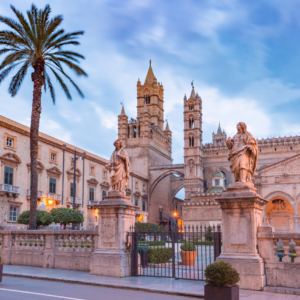
It all begins with Palermo Cathedral, with its forms that tell a story of influences: Arab-inspired domes, Gothic portals, Baroque decorations. It is a building that belongs not to a single style, but to all of them, like the city itself.
A few steps away stands the Norman Palace, the royal residence and heart of power. Inside, it houses one of Europe's most precious treasures: the Palatine Chapel. Entering here is like immersing yourself in a golden sky: Byzantine mosaics shimmer with their own light, geometric arabesques decorating the wooden ceilings, inscriptions in Latin, Greek, and Arabic that testify to the coexistence of peoples and religions.
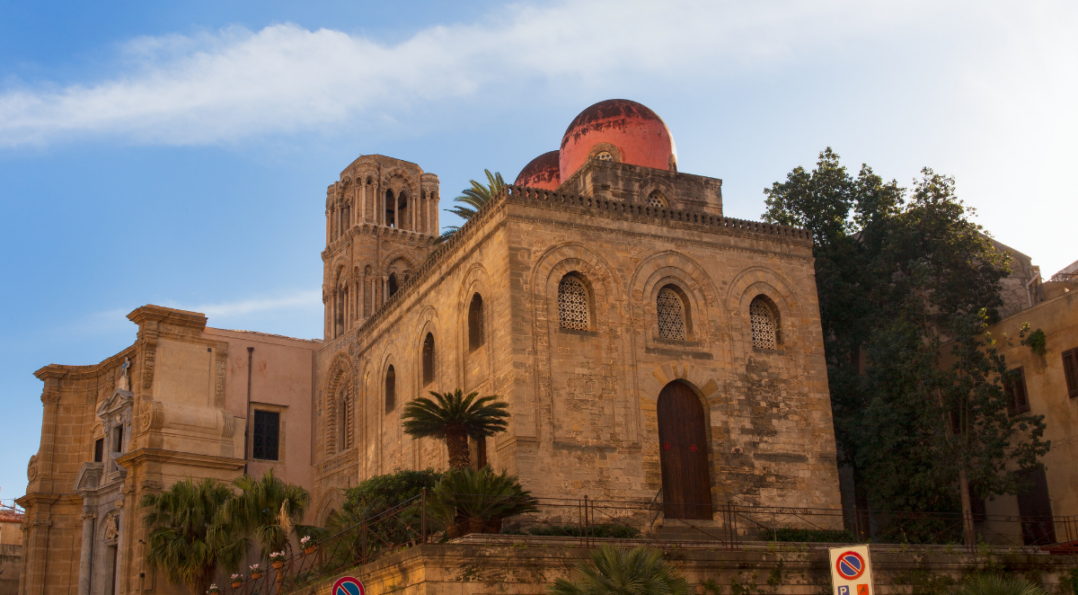
The tour continues with the Church of San Giovanni degli Eremiti, recognizable by its red domes, a symbol of the Islamic influence that has successfully fused with Christian architecture. Strolling through its silent gardens, among citrus trees and ancient stones, one can still sense the spirituality that permeates this place.
The Arab-Norman itinerary then extends into the province, with two true gems: the Cathedral of Monreale, with its mosaics narrating the entire Bible in images, and the Cathedral of Cefalù, which overlooks the sea with the solemnity of a fortress and the elegance of a royal palace.
Every stop on this journey is a revelation. Arab, Norman, and Byzantine art did not simply meet: they fused, creating a unique style. A harmony of forms and symbols that speaks to the grandeur of an era and still enchants visitors to Palermo today.
The Arab-Norman Itinerary is more than just a stroll among monuments. It's a journey into the soul of the city, an experience that helps us understand how beauty is born from encounters and dialogue.
Those who travel it see more than just stones and mosaics: they hear the voice of a past that lives on, and that makes Palermo such an extraordinary place.